
 Client Login
 Tax Update
COVID Relief Filing Options
Some taxpayers may have an opportunity to request IRS penalty abatement or refunds tied to the COVID-era disaster relief period thanks to a recent federal court decision, Kwong v. United States. The first step is determining whether your IRS transcripts show penalties or interest during the affected period.
This is not automatic, and not every taxpayer will qualify. If you had IRS penalties, interest, late filing, late payment, or unresolved IRS balances connected to the 2019–2022 tax years, this may be worth reviewing before July 10th, 2026 deadline applies.

Choose Your Path
Choose the option that best fits how much support you want and whether you already know there may be money to recover.

DIY Option
Self-serve filing
Best for: Hands on taxpayers who want to handle the process themselves.
- Pull your own IRS transcripts
- Review penalties and interest
- Complete form 843 yourself
- Mail by certified mail

Discovery Review
Dark Horse Eligibility Review
Best for: people who want to know whether an opportunity exists before deciding what to do next
- POA required
- We pull your IRS transcripts
- We identify whether a refund or abatement opportunity appears to exist
- No filing or monitoring included

Full-Service Filling
Done-for-you support $1,000 / Per Tax Year Per Form
Best for: taxpayers with a confirmed opportunity who expect $3,000+ back per tax year
- Dark Horse prepares the claim package
- Protective Claim Form 843 and support materials included
- Form 843 Refund Request (future once approved)
- Certified mail & return receipt confirmation
A Potential Refund or Abatement Opportunity But Only If You Act

Why This Matters
Recent legal developments may create an opportunity for certain taxpayers to request refunds or abatements of IRS penalties and interest assessed during the COVID-era disaster relief period. However, relief is not expected to be automatic for most taxpayers. In many cases, taxpayers need to review IRS transcripts and file a claim to preserve their rights.
The affected window generally centers on IRS penalties and interest tied to the period from January 20, 2020 through July 10, 2023. The most common affected tax years are likely to be 2019, 2020, 2021, and 2022, but eligibility depends on your specific IRS account activity.
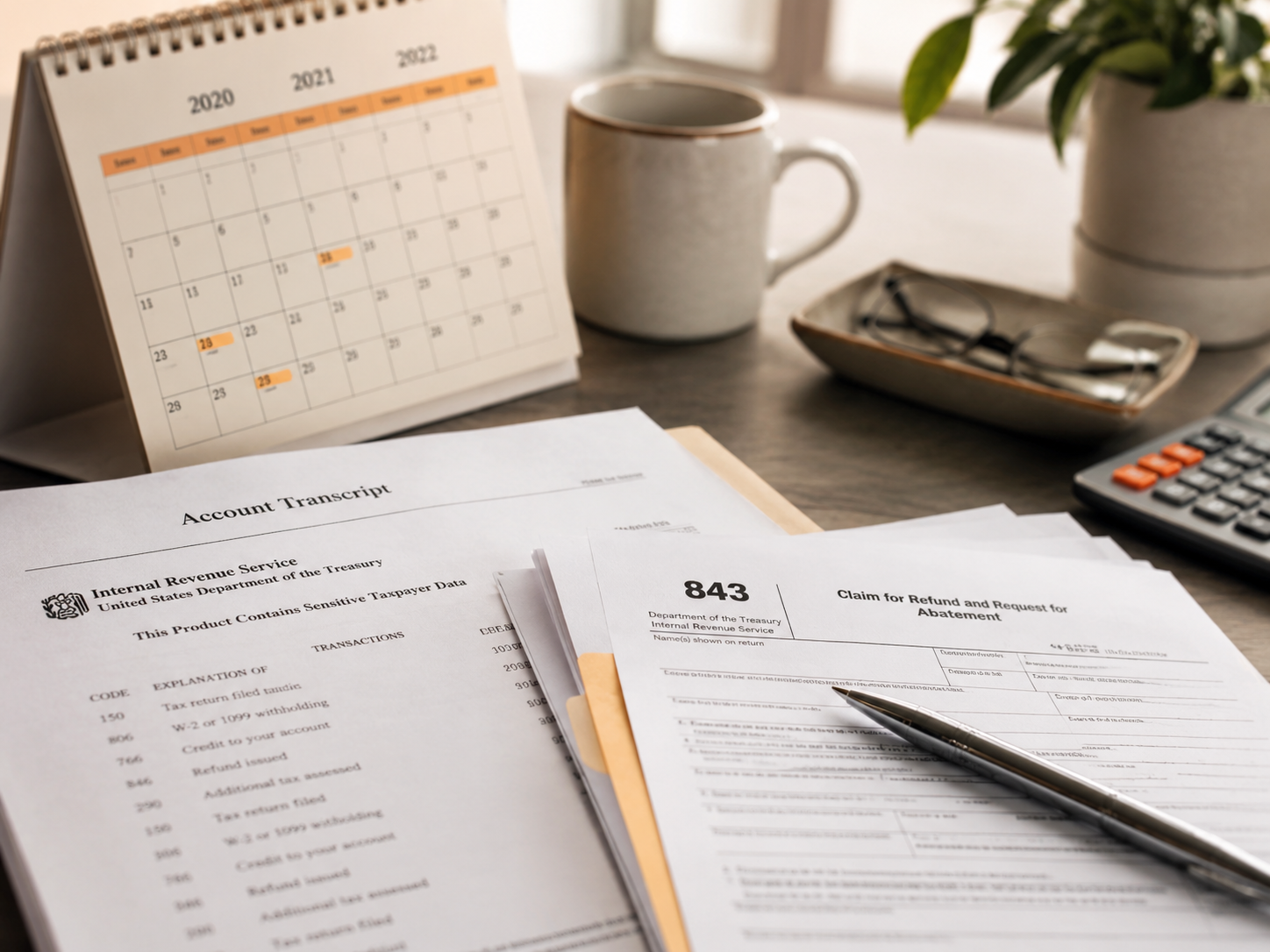
How to Start the DIY Review
Follow these steps to pull transcripts, review potential penalties or interest, and preserve proof of mailing.
- Step 1: Access Your IRS Account Go to the IRS Online Account or IRS Get Transcript page and sign in using your IRS account or ID.me credentials.
- Step 2: Download Your Transcripts: Review from 2019 to 2022 and download Account Transcript or Record of Account Transcript, if available.
- Step 3: Review for Penalties and Interest Look for penalties, interest, payments, credits, abatements, or adjustments during the affected period.
- Step 4: Determine Whether a Claim May Be Needed If you identify penalties or interest that appear connected to the COVID-era period, you may want to file Form 843 or consult Dark Horse before filing.
- Step 5: Complete Form 843 Prepare the IRS claim form and include a clear explanation of the refund or abatement request.
- Step 6: Mail by Certified Mail Mail the signed claim package to the appropriate IRS address using certified mail or another trackable method. Save your signed copy, attachments, certified mail receipt, and delivery confirmation.
Helpful Resources

Taxpayer Advocate Service
How to Use IRS Tax Account Transcripts to Identify Potential COVID-19 Disaster Relief Refunds
Read More Protective Claim
Tens of Millions of Taxpayers May Be Eligible for Significant Tax Refunds
Read More 
Dark Horse CPAs Scribe - POA
Quick walkthrough for reviewing and approving pending Power of Attorney requests securely.
See More Important Resources
This page is for general informational purposes only and does not constitute individualized tax, legal, or financial advice
FAQs
No. Not every taxpayer will qualify. The first step is reviewing IRS transcript activity to determine whether penalties or interest appear to fall within the affected period.
We may not have your complete IRS transcript history, especially if you were not a Dark Horse client for some or all of the affected years. IRS transcripts show the account activity needed to evaluate the opportunity.
Most taxpayers should start with 2019, 2020, 2021, and 2022. Other years may matter if older balances accrued interest into the COVID-era period.
The commonly discussed COVID-era disaster relief window is January 20, 2020 through July 10, 2023.
Many taxpayers will use IRS Form 843, Claim for Refund and Request for Abatement. Depending on the situation, separate forms may be needed for separate tax years or tax periods.
The $500 Discovery Review is non-refundable and is ONLY for the purpose of accessing and reviewing your transcripts to determine eligibility or impact of refunds or abatements. It does not get applied to any other element of the engagement.
It includes POA setup, transcript pull, transcript review, and a summary of whether an opportunity appears to exist. It does not include Form 843 preparation, claim filing, certified mailing, IRS monitoring, Appeals, or response to later IRS notices.
It includes preparation of the Protective Claim Package for a confirmed opportunity for a specific tax year. Multiple tax years and multiple Protective claim forms (individual, business, payroll etc) will incur a $1,000 charge for each. It does not include ongoing IRS monitoring, Appeals, litigation support, state claims, or later notice response unless separately engaged.
It generally makes the most sense when the expected refund or abatement is at least $3,000 per tax year, or when the taxpayer values having Dark Horse handle the process instead of self-filing.
No. Filing a claim does not guarantee that the IRS will approve a refund or abatement. This is a developing issue, and the IRS may deny, delay, or request more information.
Yes. If you mail your own claim, use certified mail WITH a return receipt or another trackable method and save proof of mailing and delivery.
Not automatically. State conformity varies, and state penalty or interest relief is not included in these options unless separately reviewed.

Not Sure Where To Start?
If you are unsure whether you qualify, the $500 Discovery Review is the best place to start. Dark Horse will pull your IRS transcripts and identify whether a refund or abatement opportunity appears to exist. From there, you can either self-file or move into Full-Service Filing if the opportunity is worth pursuing.